Organize Receipts with AI: A Verifiable Filing Template
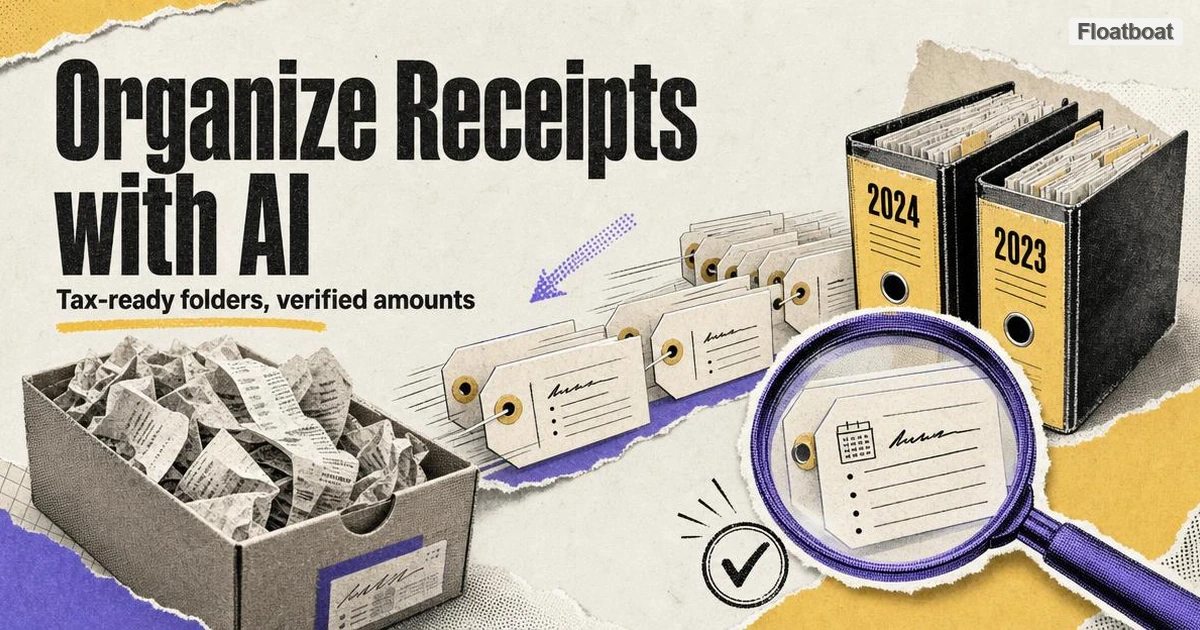
Organize receipts with AI by verifying vendor, date, amount, currency, type, and invoice number while preserving originals and isolating…
Floatboat11 min read
9 articles in this category.
Organize receipts with AI by verifying vendor, date, amount, currency, type, and invoice number while preserving originals and isolating…
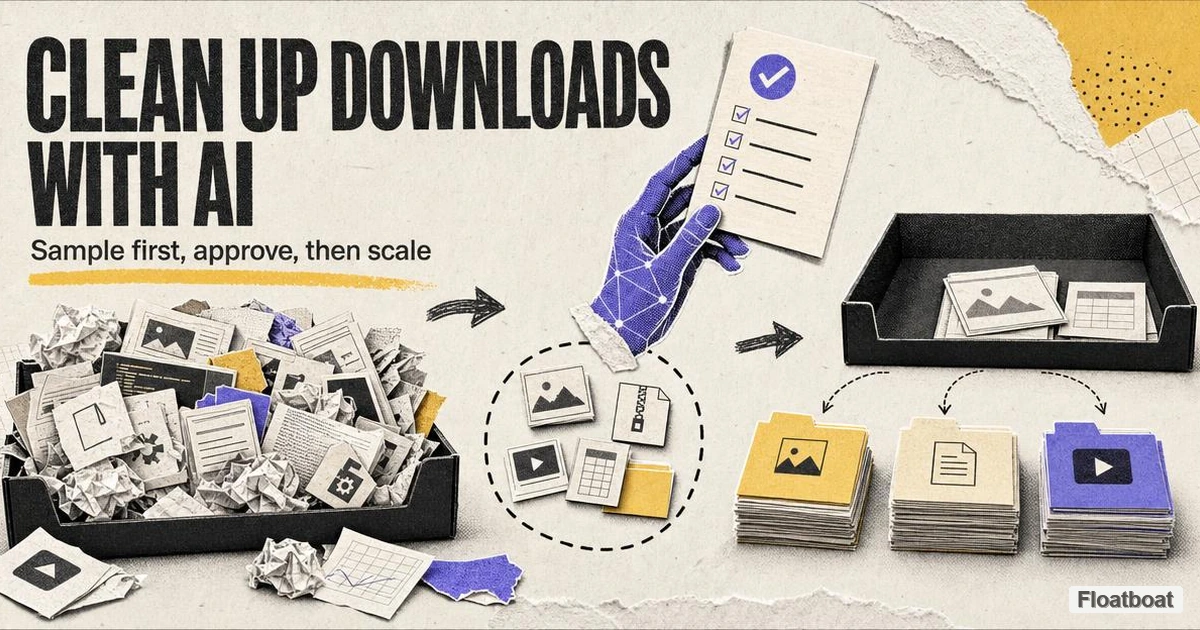
Clean up a Downloads folder with AI using a sample-first protocol, scoped prompt recipes, small-batch approval, recovery tests, and a…
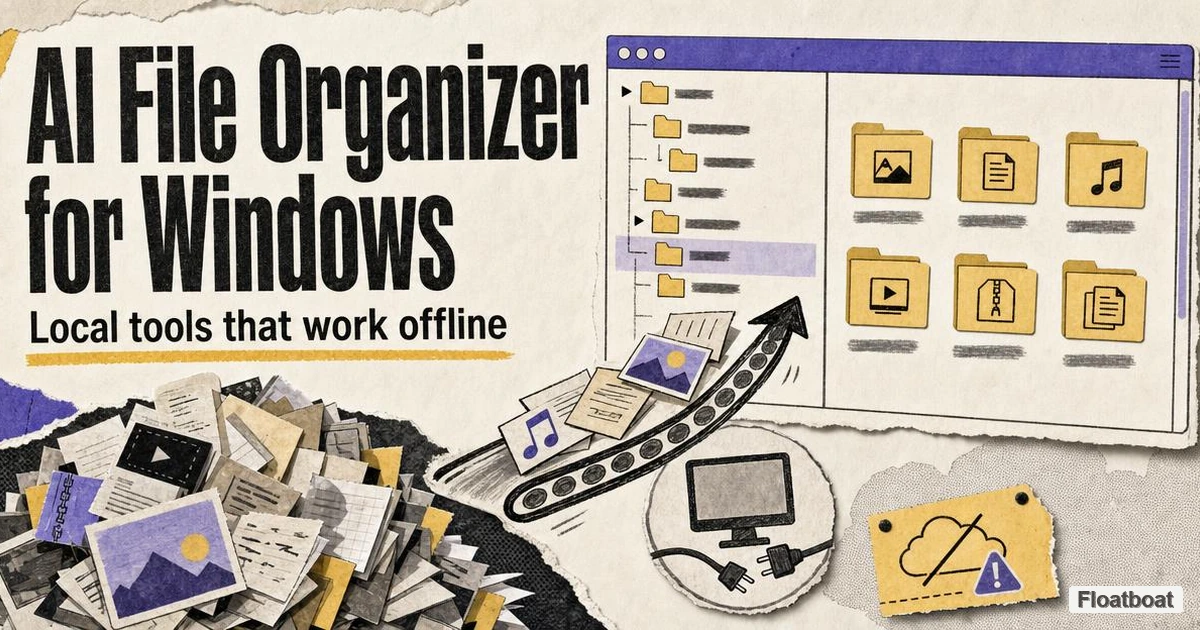
Evaluate AI file organizers for Windows by model location, network traffic, preview, restore evidence, and OneDrive placeholder behavior.
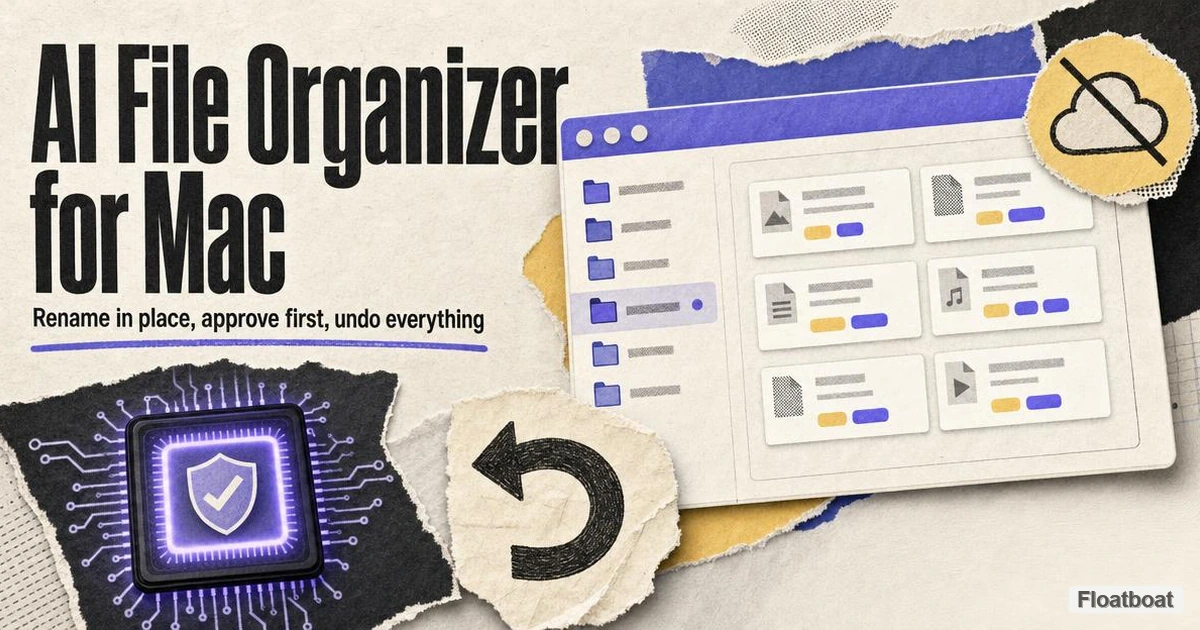
Before an AI file organizer touches your Mac, check its scope, iCloud behavior, permissions, preview and undo design, and backup plan.
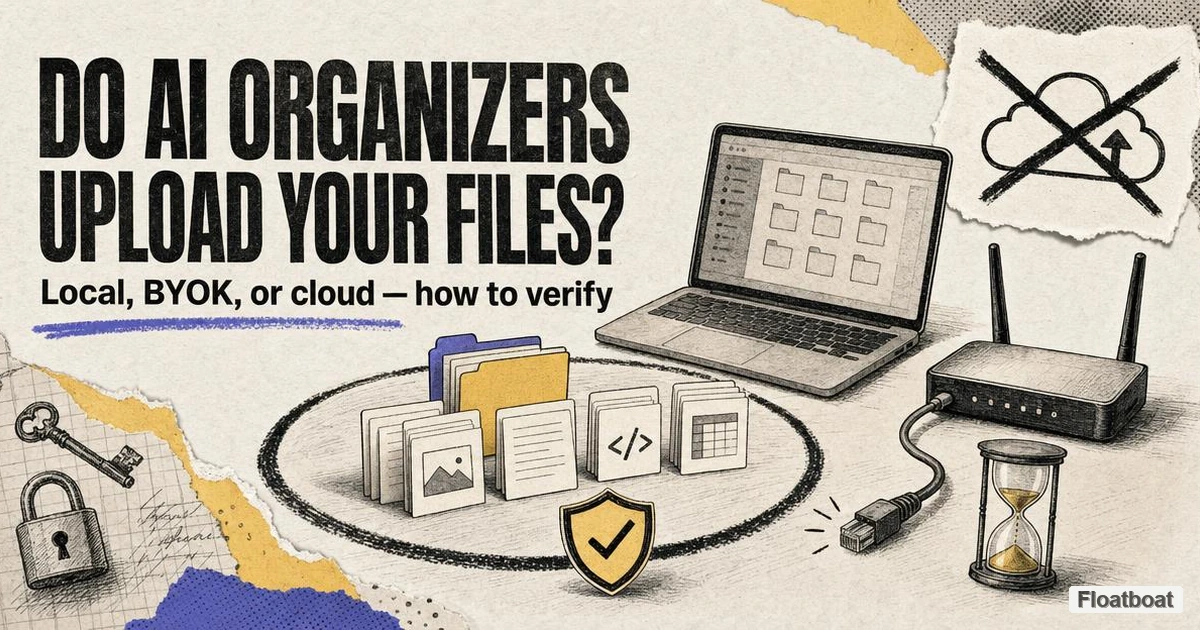
Do AI file organizers upload your files? Compare local, BYOK and managed-cloud data paths, retention disclosures, and a practical…
The best AI file renamer for Mac and Windows, ranked by renaming power, safety, and privacy — from offline picks to invoice-batch tools.
Best AI file organizers for Mac and Windows, compared by content reading, sort-and-rename workflow, privacy modes, review, undo, automation…
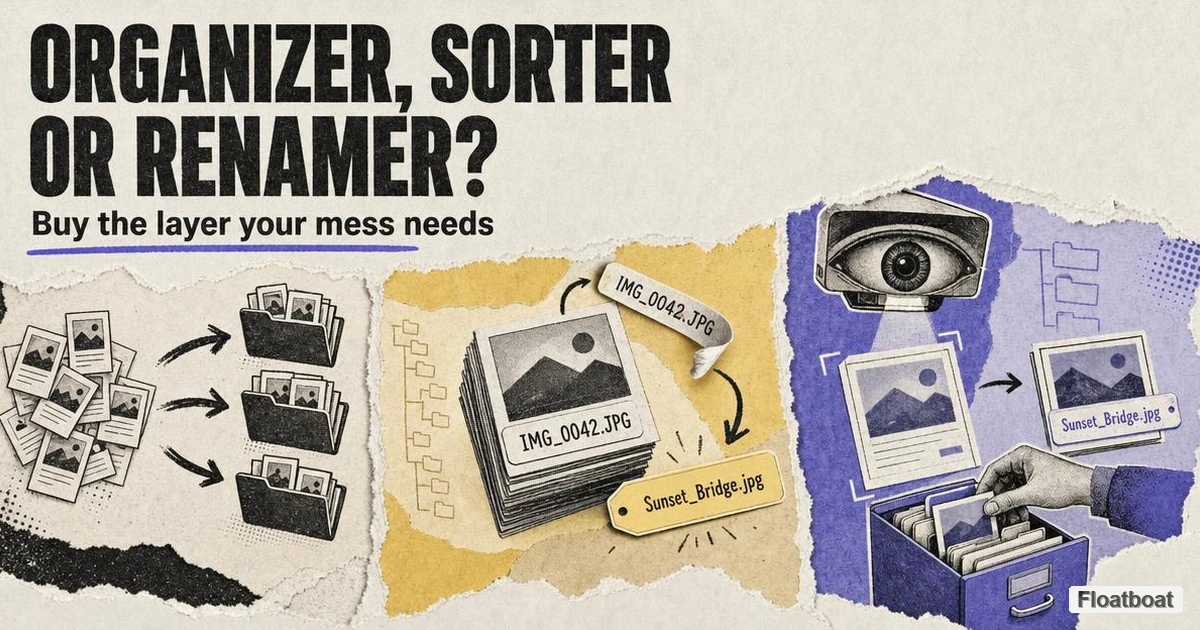
File organizer vs file sorter vs file renamer compared by the job each does, plus a five-question test to buy only the layer your mess…
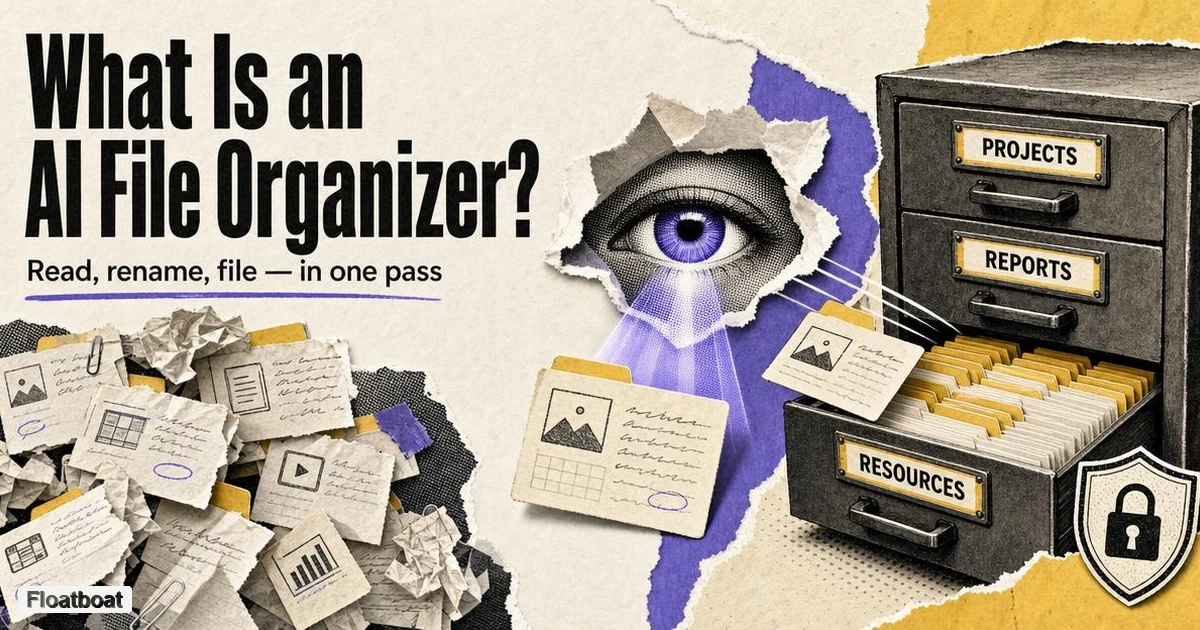
What is an AI file organizer? A neutral, practitioner-grade definition of file sorters, renamers, and organizers — and what data leaves…
/blog/category/file-management