How One-Person Businesses Work Like a Team With AI
Use role contracts, inspectable handoffs, evidence checks, and review gates to give a one-person business team-like operating discipline with AI.
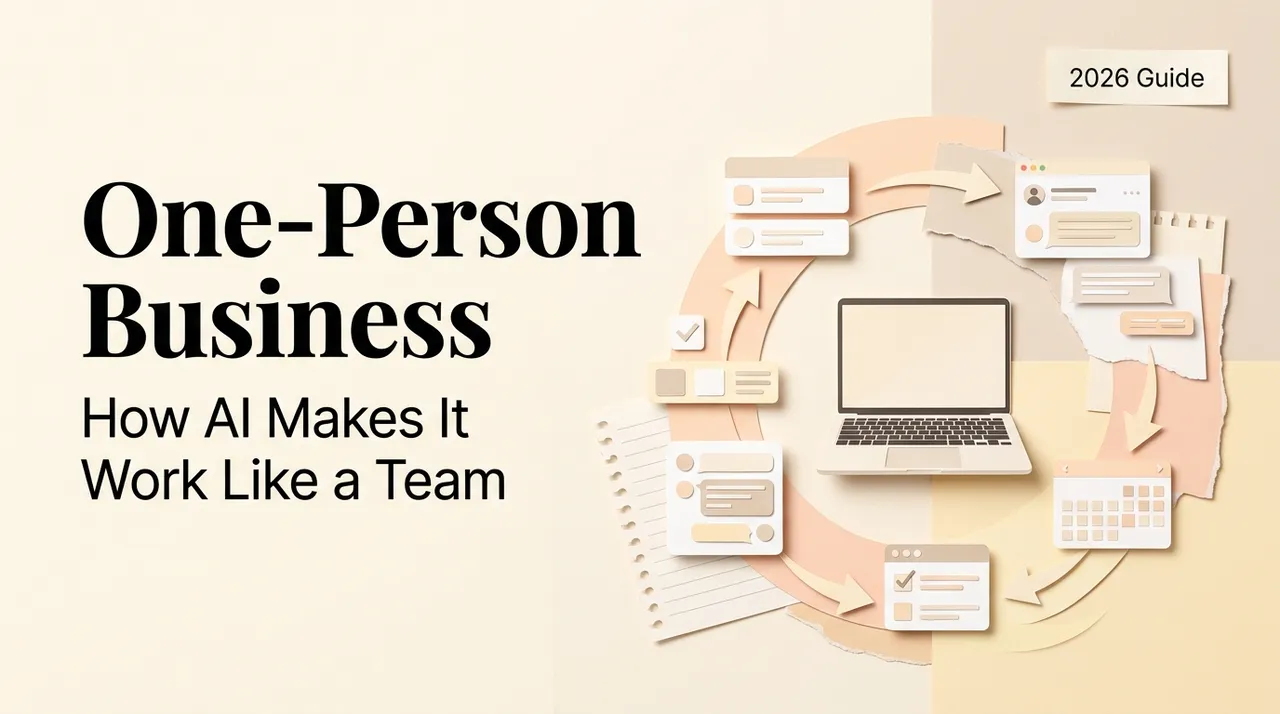
A one-person business can use AI to create team-like operating discipline, but not a literal team. The useful pattern is to separate work into roles, give each role an explicit brief, and preserve inspectable handoffs. Role names alone do not improve accuracy or transfer accountability.
Information checked October 13, 2026.
What “work like a team” should mean
Real teams divide responsibility, make decisions visible, and review work before it moves downstream. A solo operator can copy those mechanics without pretending an AI is an employee. For example, research, offer design, drafting, editing, and release can become separate stages with different evidence and acceptance rules.
This differs from the growth question in how to scale a one-person business without hiring. This page focuses on daily operating structure, not increasing capacity or revenue.
Replace personas with role contracts
For each AI-assisted role, define:
- Job: one decision or transformation.
- Inputs: approved files and sources of truth.
- Output: a named artifact with a fixed structure.
- Exclusions: what the role must not decide or do.
- Review: evidence and acceptance criteria.
- Handoff: what the next stage receives.
“Act as a marketing director” is not a role contract. “Compare three positioning options using these interview transcripts, cite every claim, and stop if pricing evidence is missing” is closer.
Anthropic’s guidance on building effective agents recommends simple, composable patterns and distinguishes predefined workflows from agents that dynamically select steps. Most solo operations should begin with staged workflows and add autonomy only where variability requires it.
A practical four-role operating loop
Research: collect authoritative sources and mark uncertainty. It cannot recommend a final direction.
Decision: compare options against the owner’s constraints and record the chosen rationale. It cannot invent missing customer evidence.
Production: create the defined deliverable from the approved decision and source pack.
Review: check facts, policy, scope, and finish state; return failures to the relevant stage rather than rewriting silently.
Save the artifact at every boundary. That makes corrections local, limits context drift, and gives the owner an audit trail.
What AI roles cannot replace
AI cannot assume legal responsibility, own a client relationship, resolve a conflict of interest, or decide the risk tolerance of the business. It can also reproduce errors across stages if every role reads the same flawed source. Independent evidence checks matter more than the number of agents.
The broader claim that AI productivity should shorten the working week is a separate policy and operating-model question, examined in OpenAI's four-day work week proposal; it should not be treated as evidence that this role design works.
For high-consequence work, keep approval with a person and separate read, draft, send, purchase, and delete permissions. If the work is stable and trigger-driven, a workflow builder may be more appropriate than a set of roles; the workspace-agent and workflow-builder comparison explains that boundary.
Original visual references
These images are restored from the article's original publication to preserve interface, workflow, and comparison context. Any product UI, pricing, benchmark result, or model availability shown is a historical capture; verify current official information before making a decision.
Start with one handoff
Choose one recurring deliverable that currently requires repeated explanation. Write role contracts for two stages, save the handoff artifact, and compare rework, missed evidence, and review time with the old process. Expand only when the boundary remains clear. Team-like work comes from visible responsibilities and review—not from assigning impressive titles to a model.
Related posts
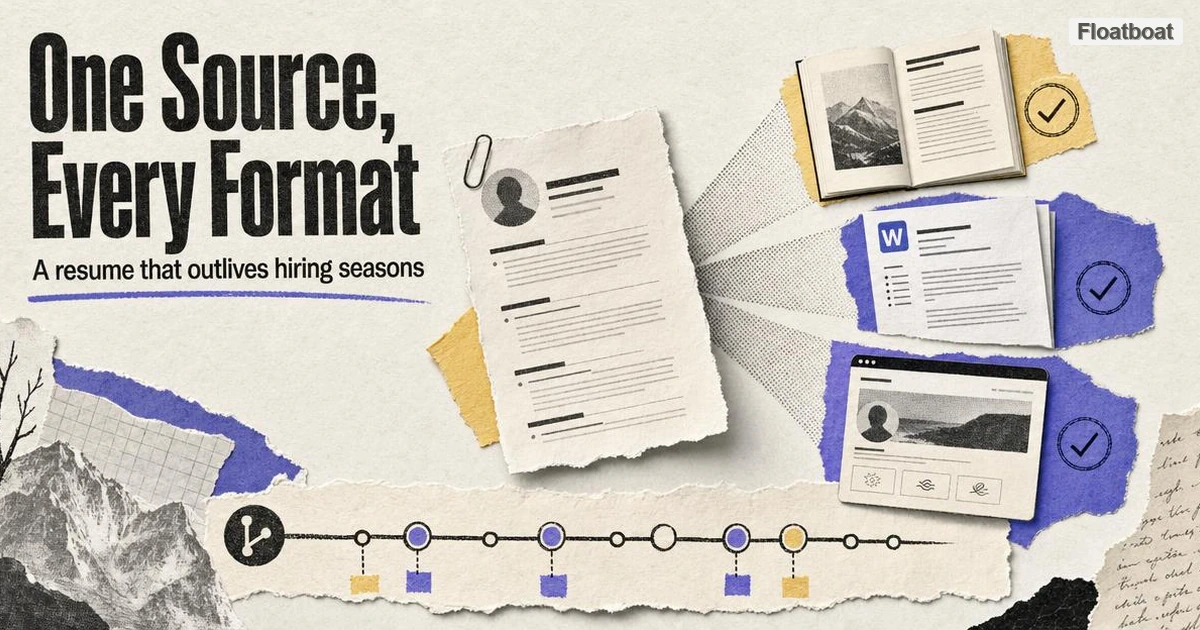
The Markdown Resume — Maintain One Source, Export Every Format
Keep your resume as one Markdown source and export print-ready PDF, Word, and web on demand — structure, git history, and what ATS parsing…
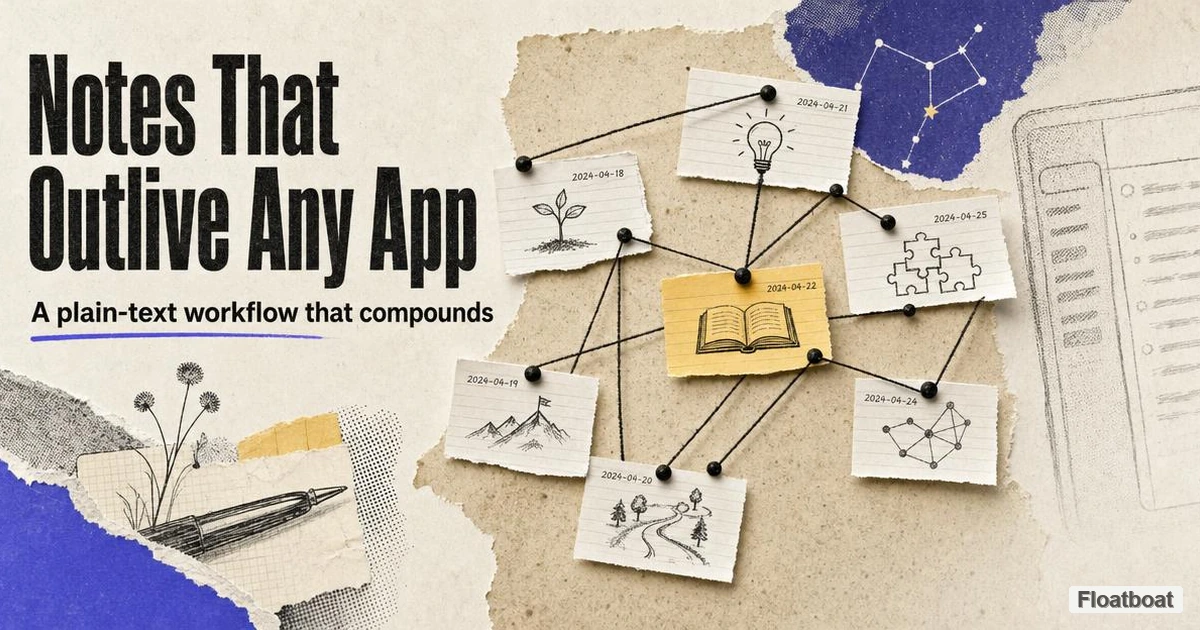
Markdown for Note-Taking — A Workflow That Outlives Any App
A markdown note-taking workflow built on plain files: naming, structure, links, and AI review. Why plain text outlives any app, and how to…
What Is an Obsidian Vault? Files, Settings, and Boundaries
An Obsidian vault is a local folder containing Markdown notes, attachments, and vault-specific settings. Learn what lives inside it, what…
https://floatboat.ai/blog/how-one-person-businesses-work-like-a-team-with-ai