
How to Scale a One-Person Business Without Hiring
Scale a one-person business by diagnosing the constraint, then testing offer, pricing, deletion, automation, or contractor capacity before hiring.

To scale a one-person business without hiring, first identify what must grow: revenue, margin, delivery capacity, or owner time. Each target requires a different lever. “More output” is not useful if it creates more support, risk, or custom work.
Information checked October 13, 2026.
Diagnose the capacity ceiling
Track one representative month by offer, customer type, and activity. Separate demand generation, sales, delivery, administration, and rework. Find the constraint: insufficient demand, low price, excessive variation, slow delivery, or owner-only decisions.
This is not the same as organizing AI roles. Working like a team with AI concerns handoffs; scaling concerns unit economics and capacity.
Five levers before hiring
Narrow the offer
Define an ideal customer, a standard outcome, included inputs, revision limits, turnaround, and exclusions. Standardization reduces estimation and rework, but it may exclude valuable custom engagements.
Change the price or packaging
Price should reflect scope, risk, alternatives, and capacity—not a universal multiplier. Test a new price with new customers before changing existing agreements. The day-one pricing guide covers how to create an initial paid offer.
Remove low-value steps
Delete reports nobody uses, unnecessary meetings, duplicate entry, and approvals without a risk purpose. Do not automate a step merely because it exists.
Automate stable repetition
Use rules for structured triggers and outputs. Use an agent only for bounded interpretation with evidence and review. Track failures and keep consequential actions behind approval.
Add external capacity without employment
A contractor or specialist can handle a bounded deliverable without creating a permanent role. This is still delegation, not zero labor, and requires a clear brief, quality standard, data boundary, and contingency.

A capacity model that prevents false growth
For each offer, record selling price, direct tool and contractor costs, owner hours, rework hours, support load, and refund or failure cost. Calculate contribution after direct costs and contribution per constrained owner hour. Review the distribution, not just the average; one difficult engagement can erase gains from several smooth ones.
Then model the proposed change. If a template saves delivery time but adds sales friction, does total contribution improve? If automation reduces manual steps but requires exception handling, who absorbs it?
When hiring is the correct answer
Hire when demand is durable, the role contains ongoing accountable work, the process is understood, access cannot be safely fragmented, and the business can carry the full cost during slower months. Hiring is not a failure of automation. It is appropriate when judgment, trust, availability, or ownership is the bottleneck.
Original visual references
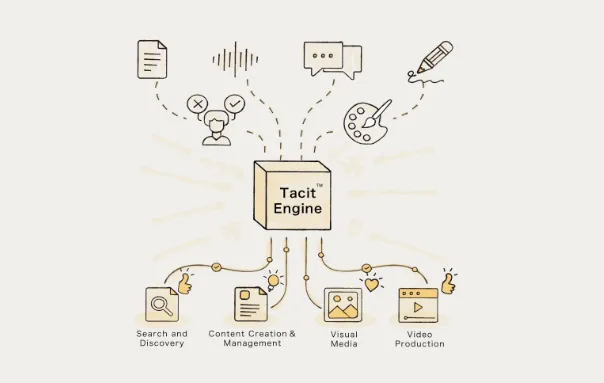
These images are restored from the article's original publication to preserve interface, workflow, and comparison context. Any product UI, pricing, benchmark result, or model availability shown is a historical capture; verify current official information before making a decision.
A 30-day scaling experiment
Choose one constraint and one lever. Define a baseline and a stop condition. Test on a limited cohort, measure contribution, owner time, quality, cycle time, and exceptions, then keep, revise, or reverse. Scaling without hiring should increase sustainable capacity—not merely move invisible work into evenings or software maintenance.
https://floatboat.ai/blog/scale-one-person-business-without-hiring