Meta Muse Spark for a One-Person Business: A Switching Guide
What Meta Muse Spark offers solo operators, what changed by version 1.3, and how to test whether switching models improves a real workflow.
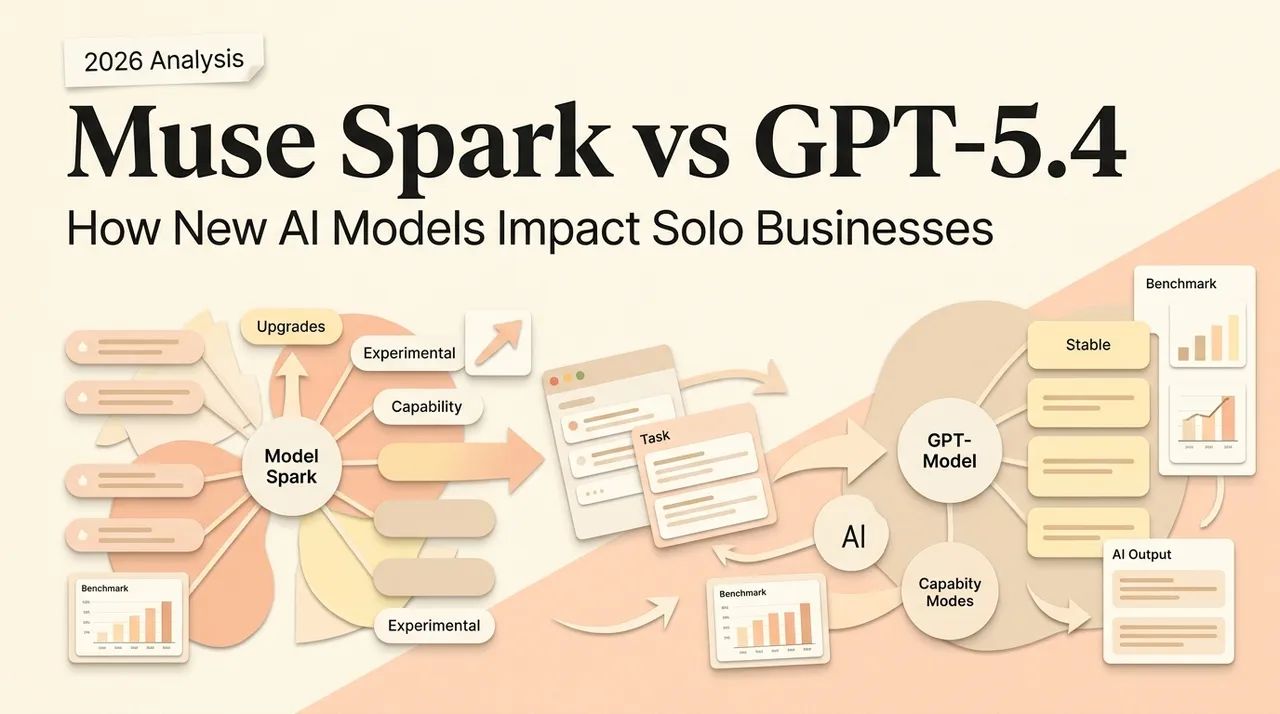
Meta Muse Spark is no longer just the April 2026 launch model. By October 13, 2026, Meta lists Muse Spark 1.3 as its current model for long-horizon agentic workflows, coding, and native multimodal perception. That makes the old “Muse Spark versus one frontier model” question less useful. A solo operator needs to know whether the current access path, task fit, and migration cost improve an actual business workflow.
This guide uses Meta’s public material rather than invented hands-on tests. It separates vendor claims from decisions you can verify yourself.
What Muse Spark is now
Meta introduced the original Muse Spark on April 8, 2026 as a natively multimodal reasoning model with tool use, visual reasoning, and multi-agent orchestration. Meta explicitly acknowledged gaps in long-horizon agentic work and coding at launch. Access began through meta.ai, the Meta AI app, and a private API preview.
The product changed quickly. Muse Spark 1.1 arrived in July with a public preview of Meta Model API and an advertised one-million-token context window. Meta’s current model page describes Muse Spark 1.3 as built for long-horizon coding and agentic work, with multimodal perception across images, video, and documents.
Those are Meta’s descriptions, not proof that the model will outperform an incumbent on your workload. The relevant change is practical: solo businesses can now evaluate Muse Spark through a developer access path instead of treating it only as a consumer assistant inside Meta products.
The decision is workflow fit, not benchmark rank
For a one-person business, a model switch affects more than answer quality. It can change prompts, tool schemas, review rules, billing, data handling, and failure recovery. A benchmark win matters only if it maps to a task you repeatedly perform.
Start with four workload categories:
| Workload | What to test | What would justify switching |
|---|---|---|
| Multimodal intake | PDFs, screenshots, product videos, mixed evidence | Fewer extraction errors and less manual preprocessing |
| Research and synthesis | Source grounding, contradiction handling, citations | Higher accepted-answer rate on your source pack |
| Coding or browser work | Tool choice, state tracking, recovery | More completed runs without unsafe or manual intervention |
| Routine drafting | Voice, constraints, edit burden | Lower total cost to an approved draft |
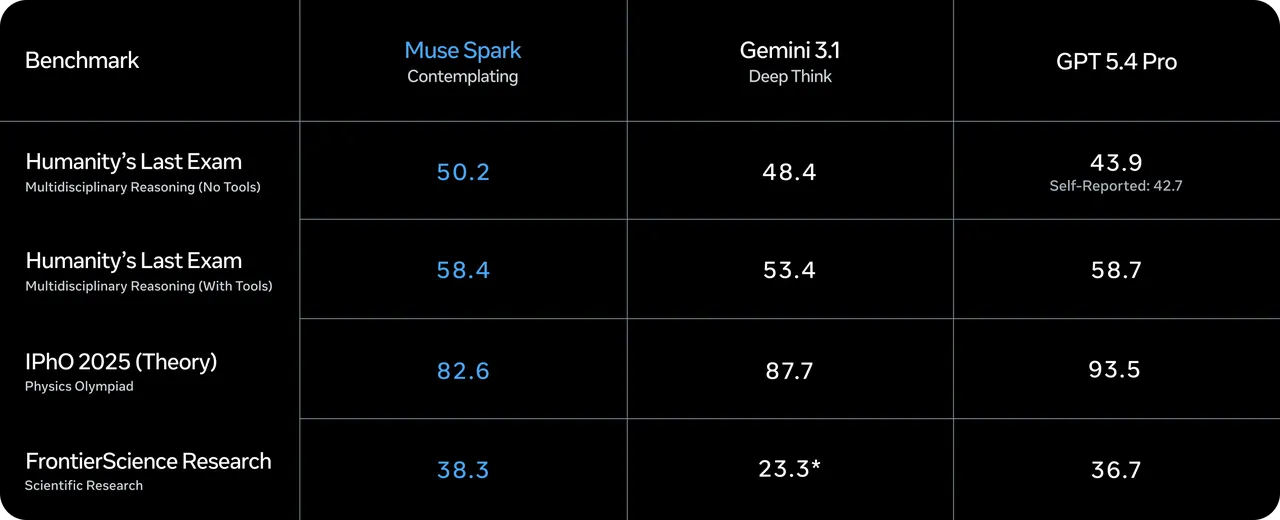
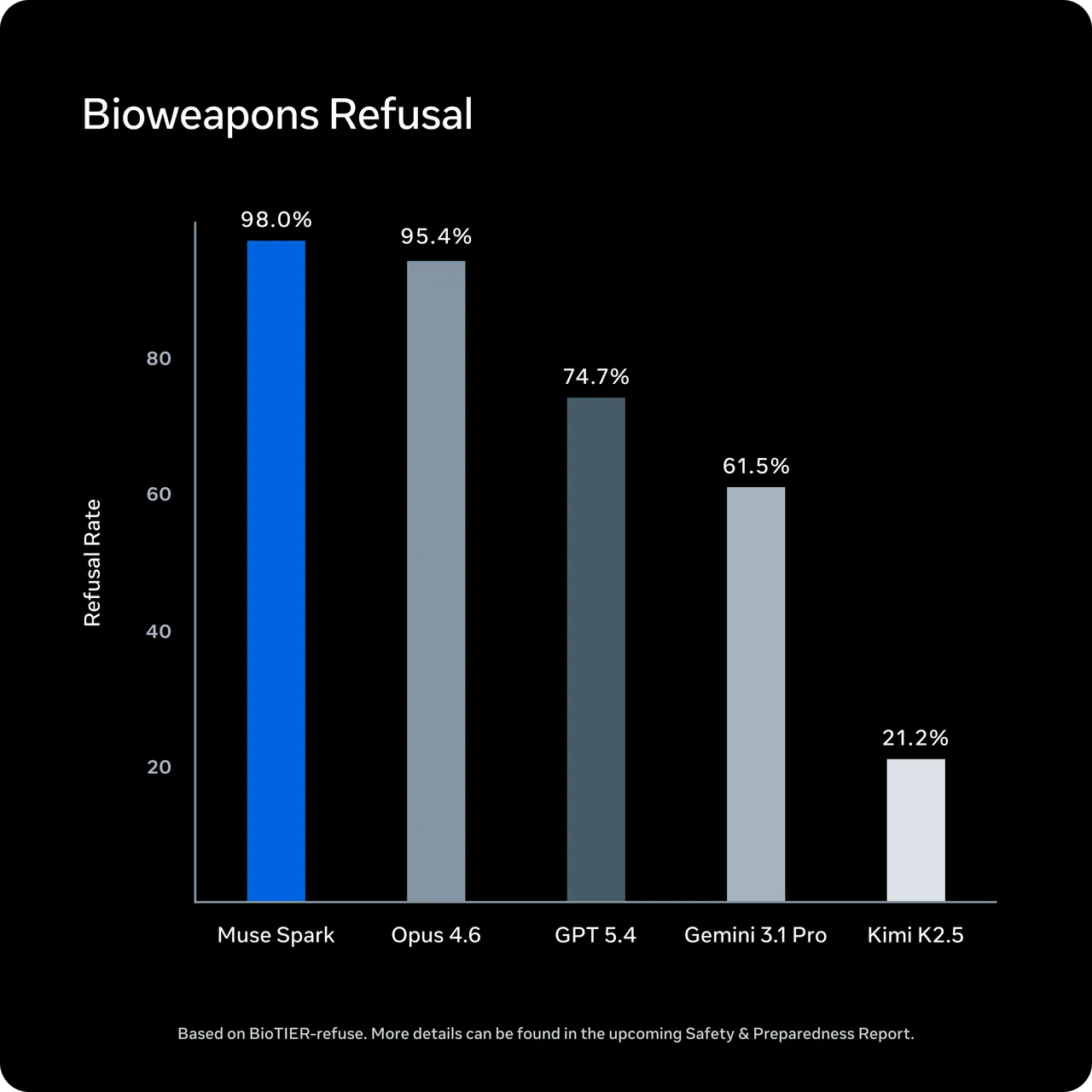
Meta’s initial launch emphasized multimodal perception, health reasoning, and parallel-agent “Contemplating” mode. Later releases shifted the emphasis toward agentic coding and computer use. That evolution is another reason not to rely on an April benchmark table in October.
Access and openness: do not assume Muse equals Llama
Llama built Meta’s reputation for open-weight models, but Muse Spark launched as a hosted product. The original release offered consumer access and a private API preview; Muse Spark 1.1 opened Meta Model API in public preview. Meta now advertises direct access and OpenAI-compatible integration on its developer pages.
That does not make Muse Spark an open-weight Llama replacement. If local deployment, weight access, offline operation, or infrastructure control is a requirement, verify the exact license and artifact available for the current model. A hosted endpoint and an open-weight checkpoint create different security, cost, and continuity obligations.
A switching test a solo operator can reproduce
Use a controlled comparison instead of moving the whole business at once.
1. Select 12–20 completed tasks
Choose recurring work with known acceptable outcomes: a source-backed brief, a customer-email draft, a document extraction, a small code change, or a structured content plan. Remove secrets and regulated data unless the candidate service has already passed your security review.
2. Freeze the task contract
Give each model the same source material, required output format, tool permissions, time limit, and stop condition. Do not rewrite the prompt mid-test to rescue one candidate.
3. Score business outcomes
Record accepted outputs, factual corrections, formatting failures, tool mistakes, run time, reviewer minutes, and total cost. For agentic work, also record unauthorized actions, recovery attempts, and whether the run knew when to ask for help.
4. Test migration friction
Estimate the work required to port prompts, integrations, evals, logging, and fallback rules. A five-percent quality gain may not repay a week of migration; a new multimodal capability that removes a manual handoff might.
5. Keep a fallback
Run the candidate on a narrow route first. Keep the existing model for high-consequence or unsupported tasks until the new path has enough evidence. The effort-and-speed routing guide shows how to preserve task-level routing instead of choosing one model for everything.
When Muse Spark is a plausible fit
Muse Spark deserves a trial when the workflow combines documents or visual inputs with tool use, when long context is genuinely required, or when a solo developer wants to compare Meta Model API with an existing OpenAI-compatible client. Meta’s own materials also make coding and multi-agent orchestration central to the current version.
It is not automatically the right choice when the current workflow already meets its quality target, when migration would disrupt revenue work, when local/open-weight deployment is mandatory, or when the task depends on a vendor-specific tool that Muse Spark cannot reproduce.
For work that can take consequential browser actions, model capability is only one part of the decision. Apply a separate browser-agent security review covering site access, credentials, prompt injection, approvals, and auditability.
Questions to ask before switching
Before adopting the model, confirm:
- which Muse Spark version the chosen surface actually serves;
- whether the feature is generally available, preview, or limited by region;
- current context, rate, and pricing limits from the provider;
- whether uploaded files or run traces are retained or used for training;
- which tools, structured outputs, and compatibility features your workflow needs;
- how model updates are versioned and whether you can pin or roll back;
- what happens when a tool call partially succeeds;
- which tasks remain on the incumbent model.
Original visual references
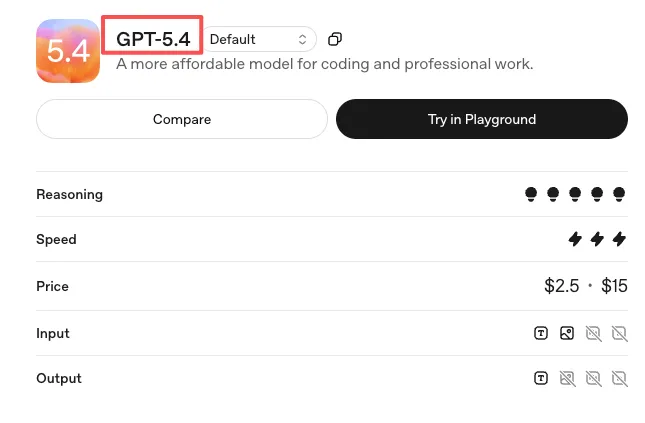
These images are restored from the article's original publication to preserve interface, workflow, and comparison context. Any product UI, pricing, benchmark result, or model availability shown is a historical capture; verify current official information before making a decision.
Bottom line
Muse Spark’s 2026 progression—from consumer access and private preview to a public developer path and later agentic releases—makes it a credible candidate to evaluate. It does not make a full migration self-evident.
For a one-person company, the winning model is the one that raises accepted output per hour without creating more review, security, or maintenance work. Test a narrow route, measure the entire task, and switch only where the evidence survives the migration cost.
Related posts

GPT-6.1 Sol: Pricing, Benchmarks, Availability, and How It Compares
GPT-6.1 Sol brings near-Astra coding, computer use, and professional-work performance at one-fifth of Astra's token prices. Here is what…
What Is Jev? The AI Model That Never Writes Text
Jev is TypeSafe AI's System One model: typed probabilistic decisions instead of generated text, claimed 193.6x faster and 444.6x cheaper.…
DeepSeek V4.1 Flash: Release Status, Specs, Pricing, and Migration
DeepSeek V4.1 Flash is now the production Flash model. Verify its model ID, 1M context, vision support, peak pricing, retired aliases, and…
https://floatboat.ai/blog/meta-muse-spark-one-person-company