
Lindy vs Gumloop: Which AI Agent Tool Fits You?
Choose Lindy or Gumloop with the same task: compare agent instructions, visual workflows, permissions, approvals, run records, recovery, and total operating cost without invented tests or prices.

TL;DR
- Lindy emphasizes agent-led tasks and templates; Gumloop emphasizes explicit visual workflows and agent nodes.
- This comparison does not claim a personal head-to-head test, setup time, score, price, or credit burn. Dynamic information was checked October 13, 2026 and must be reverified on official pages.
- Choose through the same task, permission boundary, failure case, and acceptance rubric.
The architectural difference
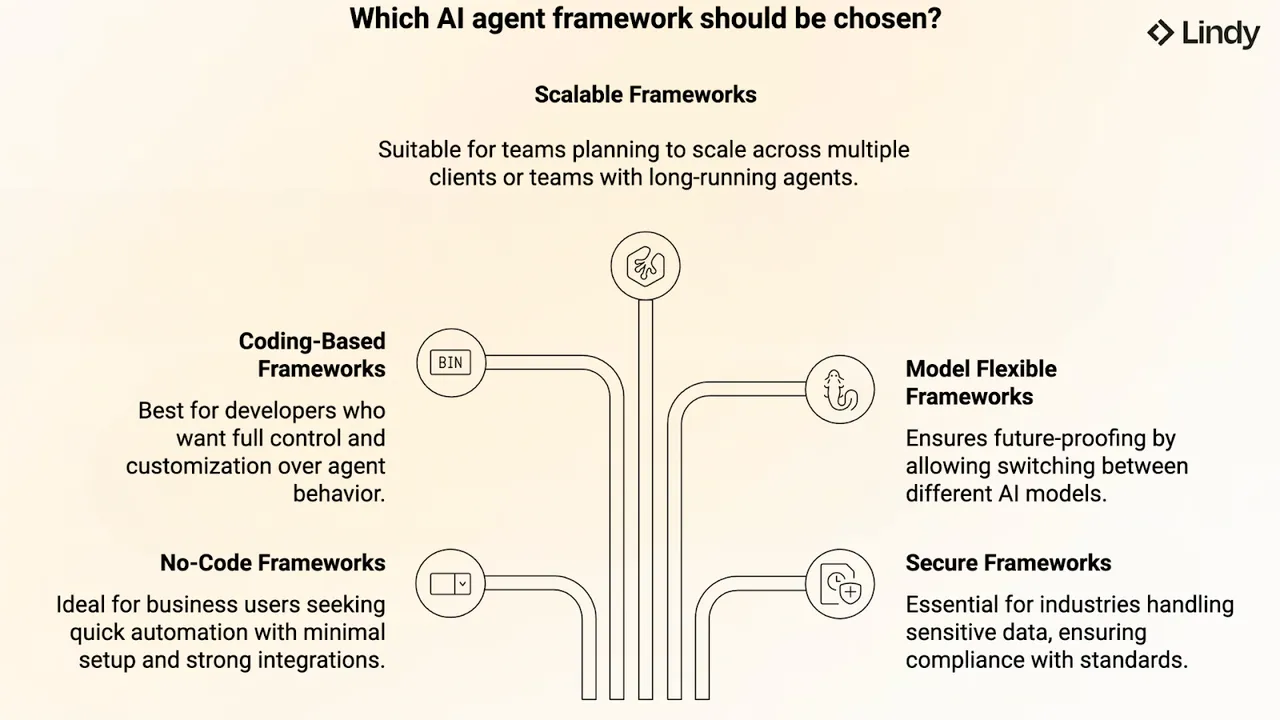
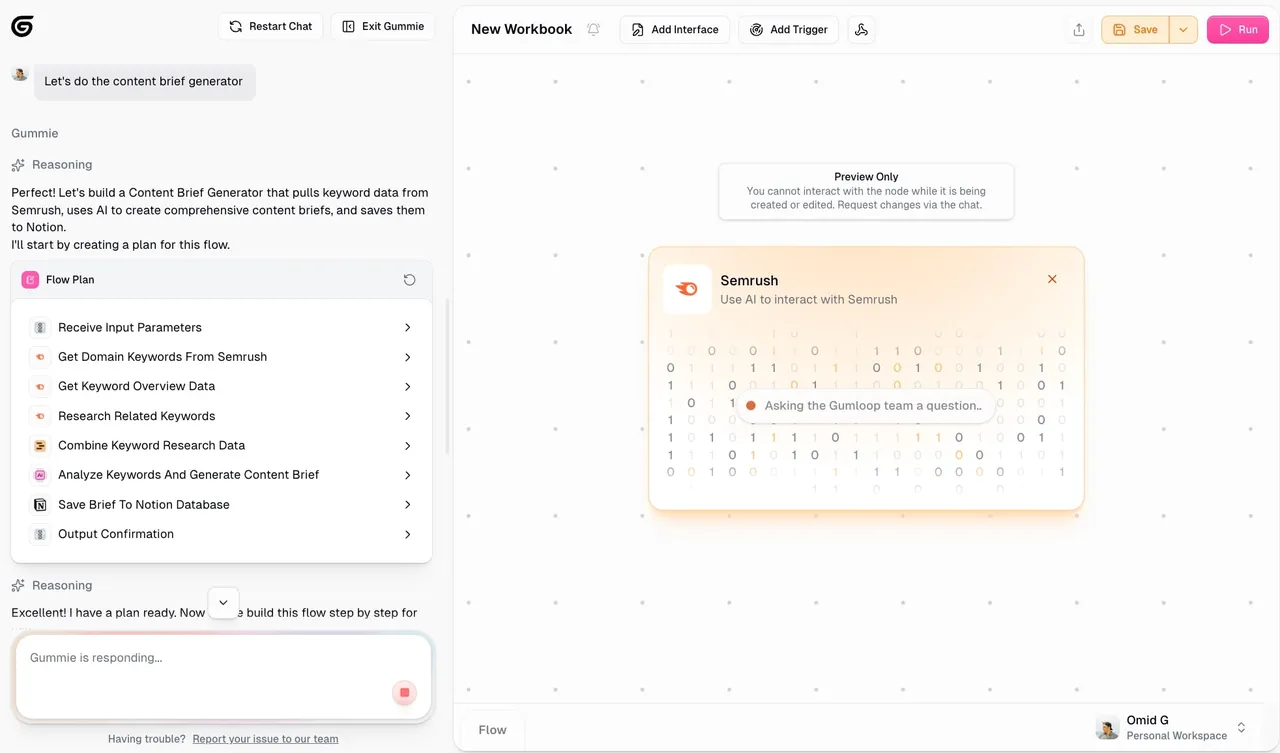
Lindy’s official materials position agents around business tasks such as email, meetings, and follow-up. Gumloop’s official Agent Node documentation places adaptive reasoning inside a workflow whose nodes and control flow remain visible. The difference is where the operator specifies logic—not whether one product “has AI.”
For the wider category, see AI agent builders. For a deeper Gumloop evaluation framework, see Gumloop review.
Compare them on one workflow
Choose a representative task with a clear input and accepted output. Define allowed systems, write permissions, approval points, retry policy, and a deliberately injected failure. Build the task in both tools and record setup steps, correction time, run logs, recovery, and the accepted artifact.
| Dimension | Lindy pilot | Gumloop pilot |
|---|---|---|
| Control surface | Agent instructions and documented templates | Visual nodes, connections, and agent nodes |
| Permission test | Connector scope and action approval | Connector scope and per-node writes |
| Failure test | Agent handoff or tool failure | Node error, retry, or branch failure |
| Observability | Inspect run history and action record | Inspect node inputs, outputs, and run path |
| Cost | Verify current official plan and measured run | Verify current official plan and measured run |
When Lindy may fit
Consider Lindy when the task maps to an officially documented agent or template and the team prefers instruction-led configuration. Do not assume faster setup: measure it. Verify current connectors, action approvals, and plan access on Lindy’s official site.
When Gumloop may fit
Consider Gumloop when a repeated data or document process benefits from visible nodes, branches, retries, and structured handoffs. Verify current integrations and browser behavior in Gumloop’s official documentation. A visual canvas improves inspectability only if the team reviews and maintains it.
Shared limitations
Both can fail through bad source data, broad credentials, ambiguous instructions, model error, or an unhandled external-system change. Neither removes the need for least privilege, logs, acceptance tests, and an owner. Measure current pricing and credit consumption during the pilot to estimate the cost of your own workload.
Original visual references
These images are restored from the article's original publication to preserve interface, workflow, and comparison context. Any product UI, pricing, benchmark result, or model availability shown is a historical capture; verify current official information before making a decision.


Decision rule
Choose the tool that passes the same acceptance test with the smaller total burden across setup, permissions, correction, recovery, and ongoing ownership. If neither passes, simplify the workflow before adding more automation.
Related posts

Local-First vs Cloud Agent Workspaces: Which Fits?
Compare local-first and cloud agent workspaces across files, privacy, background execution, connectors, reliability, and control—then…

Best Markdown Editors in 2026 — Ranked by Workflow, Not Features
Obsidian, Typora, VS Code, Zettlr, iA Writer and more, ranked by workflow fit. What each editor trades away, and where browser tools beat…

Math in Markdown: LaTeX Syntax and Where It Renders
How math in markdown works: dollar-sign LaTeX syntax, where it renders (GitHub, Obsidian, Jekyll), the KaTeX vs MathJax split, and honest…
https://floatboat.ai/blog/lindy-vs-gumloop