
Genspark vs Manus: Which Agent Finishes Real Work
Compare Genspark and Manus by research quality, artifacts, permissions, repeatability, and workload cost, with a practical seven-task trial.
Genspark vs Manus is not a useful comparison if it stops at feature checklists. Both products can research and produce artifacts, and both change quickly. The better choice depends on the task you delegate, the evidence you need, and the actions you are willing to authorize.
Information checked October 13, 2026. Plans, credits, integrations, and availability can change; confirm them on the vendors’ current product and billing pages before buying.
The shortest useful answer
Choose Genspark when your recurring job begins with gathering information and ends with a shareable research or content artifact. Choose Manus when your evaluation is centered on broader multi-step delegation and execution across tools. Treat those as hypotheses to test, not permanent product boundaries.
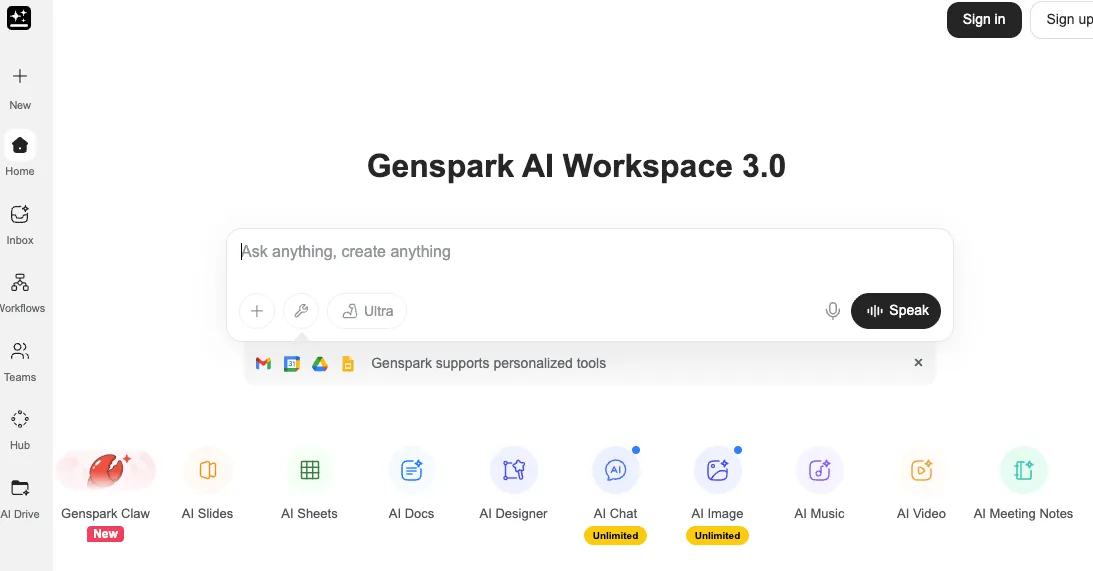
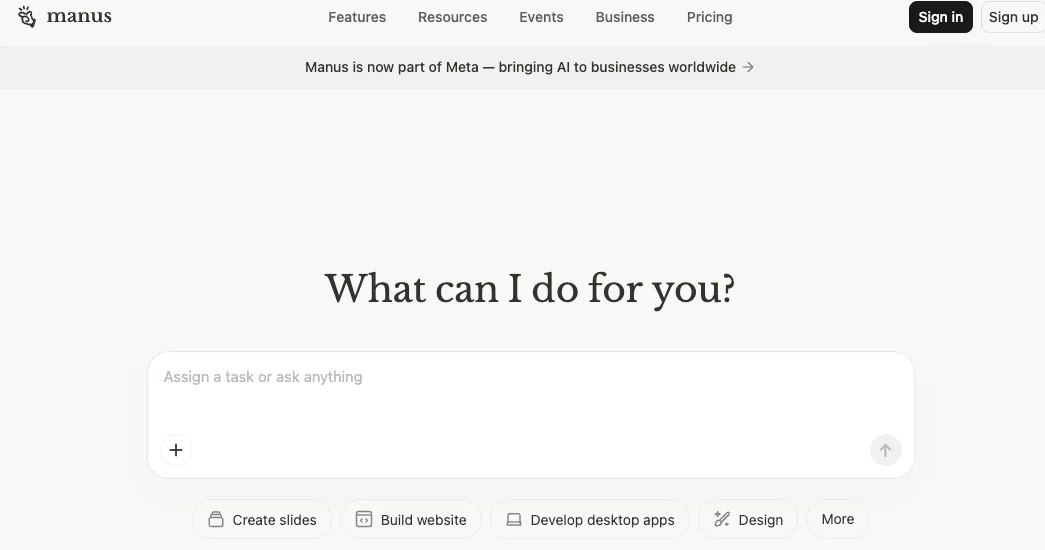
Genspark describes its product as an AI workspace with Super Agent capabilities, while Manus presents itself as a general AI agent. Those labels do not establish reliability. Only a trial using your own sources, accounts, and approval rules can do that.
Compare the workflow, not the demo
Research and evidence
Give both tools the same question, required sources, date cutoff, and output format. Check whether each claim points to a source, whether contradictory evidence is surfaced, and whether the agent distinguishes missing data from a negative finding.
Artifacts
Ask for the artifact you actually need: a brief, slide deck, spreadsheet, webpage, or structured report. Score editability, provenance, and how much cleanup remains—not visual polish alone.
Actions and permissions
Any agent that can browse authenticated services or take actions needs a narrower test. Record which account it uses, what it can read or write, where approval appears, and whether an action can be reversed. The same questions apply when comparing browser agents with workspaces.

A fair seven-task trial
- Find five authoritative sources under a fixed date cutoff.
- Produce a cited comparison and flag uncertainty.
- Turn the findings into an editable artifact.
- Revise one section without changing approved sections.
- Resume after an interruption without losing constraints.
- Request approval before an external write or send.
- Export the result and the supporting evidence.
Measure completion, source accuracy, intervention count, cleanup time, and credit or plan consumption. Run the same task twice: an agent that succeeds once but behaves differently on repetition may be unsuitable for recurring work.
Pricing needs workload math
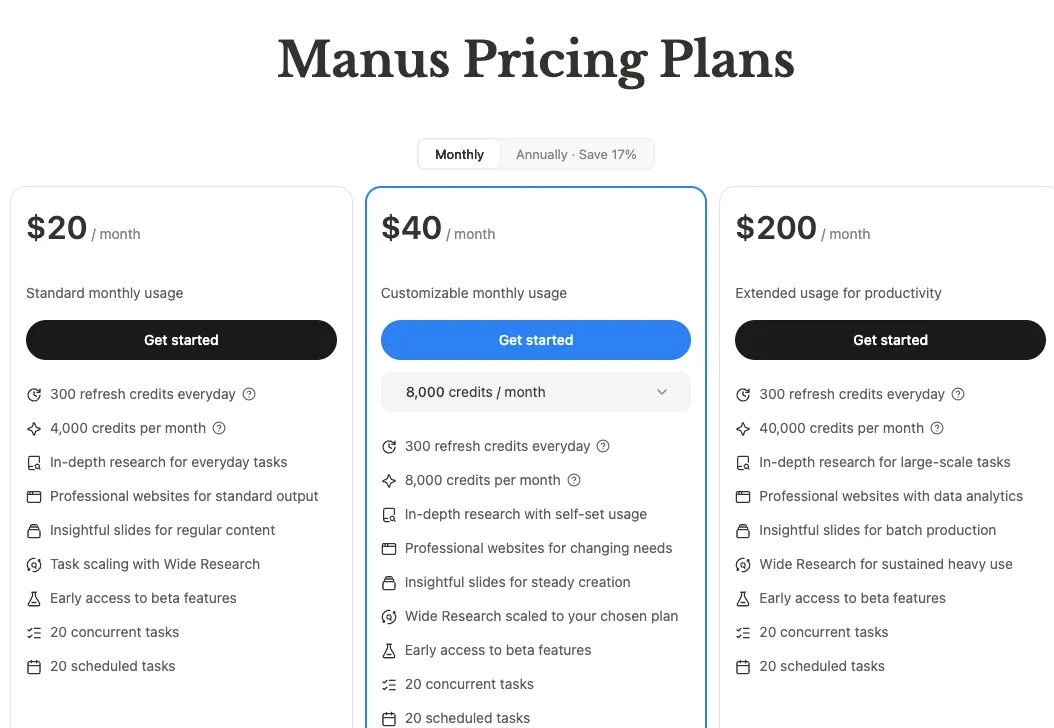
Credit systems make headline subscription prices incomplete. Estimate the monthly number of research runs, artifact generations, retries, and premium-tool calls, then test a representative week. Do not reuse historical prices from comparison articles. For Genspark, the separate guide to Genspark pricing and credits explains the questions to ask; Manus buyers should apply the same method to its current plan page.
Original visual references
These images are restored from the article's original publication to preserve interface, workflow, and comparison context. Any product UI, pricing, benchmark result, or model availability shown is a historical capture; verify current official information before making a decision.
Which one should you choose?
Genspark is the stronger candidate when source gathering and presentation-ready outputs dominate your work. Manus is the stronger candidate when the central requirement is delegating a longer chain that crosses tools. Choose neither if your work involves sensitive accounts without adequate permission controls, if citations are not inspectable, or if the cost of retries is hard to forecast. The broader list of Manus alternatives is useful only after you define this test.
The durable buying decision is not “Which agent is more autonomous?” It is “Which system completes my bounded task with evidence, predictable intervention, and acceptable risk?”
https://floatboat.ai/blog/genspark-vs-manus