
DeepSeek V4 API for Solo Operators: Pricing, Models, and Cost Controls
A current DeepSeek V4 API guide for solo operators: model IDs, peak and off-peak prices, cache economics, routing caveats, and a practical pilot budget.
Originally published April 17, 2026; information checked October 13, 2026. DeepSeek uses rolling aliases and time-dependent pricing. Recheck the official catalog before estimating production spend.
The DeepSeek V4 API can be inexpensive for document processing, coding agents, and repeated back-office tasks, but the cheapest published token rate is not a budget. A solo operator needs to know which model actually serves the request, whether traffic lands in peak hours, how often prompts hit cache, and how many retries or tool loops a completed task consumes.
Current model IDs
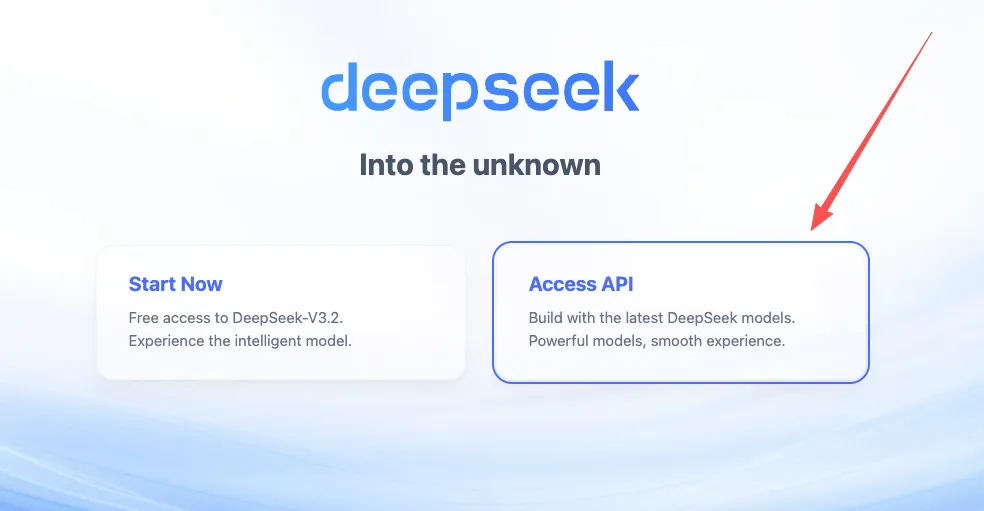
DeepSeek’s models and pricing documentation lists two API names:
deepseek-flash: DeepSeek-V4.1-Flash, with text and image input.deepseek-v4-pro: shown as DeepSeek-V4-Pro-0813 in the catalog.
Both are documented with 1M context and maximum output of 384K, thinking and non-thinking modes, tool calls, JSON output, Responses API, and Anthropic-format access. Yet the V4.1 Flash release notice says deepseek-v4-pro requests started routing to V4.1 Flash on September 14 until V4.1-Pro launches. Treat aliases as moving targets and verify the serving behavior required by your application.
Published token prices
The official table prices one million tokens as follows:
| Model | Cache-hit input off/peak | Cache-miss input off/peak | Output off/peak |
|---|---|---|---|
| V4.1 Flash | $0.003 / $0.006 | $0.15 / $0.30 | $0.60 / $1.20 |
| V4 Pro | $0.022 / $0.044 | $0.66 / $1.32 | $1.98 / $3.96 |
Peak hours are 01:00–04:00 and 06:00–10:00 UTC on weekdays, excluding Chinese public holidays. Other periods are off-peak. These are API token charges, not a guarantee of total workflow cost; web search, external tools, storage, queues, monitoring, and failed attempts add their own costs.
Estimate cost per accepted task
For each workflow, record uncached input, cached input, output, number of model calls, tool charges, retry count, and whether a human accepted the result. Then calculate:
accepted-task cost = all run costs / accepted outputs
This avoids a misleading comparison in which one model looks cheap per token but uses more output, loops more often, or produces work that requires re-running. Use a representative month of tasks rather than a single prompt. The same method also makes a fair comparison with other providers.
Cache economics matter most when a stable prefix—policies, schemas, reference documents, or repository instructions—repeats across requests. Do not pad prompts merely to chase cache hits. Keep stable material separate, measure actual hit rates, and test what happens when the provider invalidates or misses cache.
A safe solo-operator pilot
Start with a reversible workload such as classification, draft generation, or read-only analysis. Set a hard weekly spend cap and a maximum call count per task. Require review before any message is sent, file is overwritten, or external record changes. Log the model alias, timestamp, reasoning mode, token counts, tool calls, and final disposition.
Run a small acceptance set before increasing volume:
- ordinary examples;
- long-context examples;
- malformed input;
- missing evidence;
- duplicate event or retry;
- a request that should stop for approval.
For coding, DeepSeek publishes official integrations for Claude Code and Codex. Switching the endpoint does not remove the harness’s security responsibilities; compare the trade-offs in DeepSeek Agent versus Claude Code. For the current Flash checkpoint and retired aliases, see DeepSeek V4.1 Flash.
Original visual references
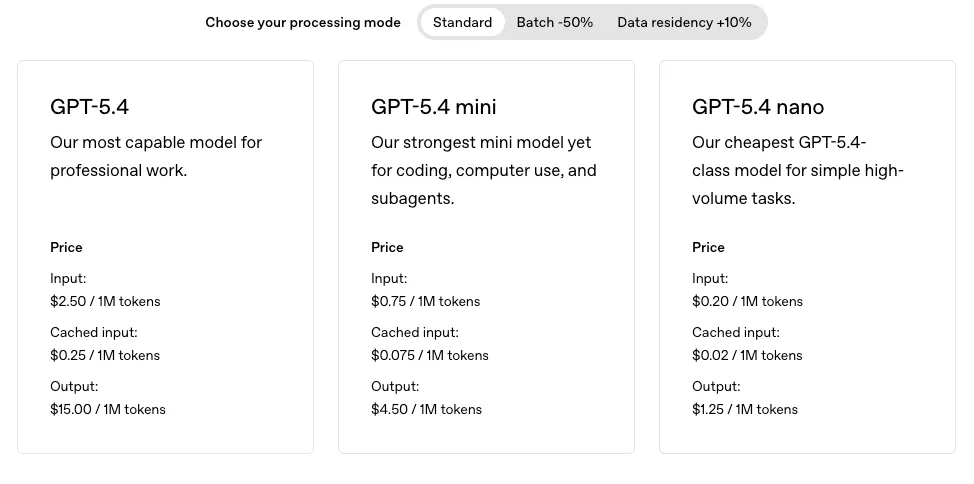
These images are restored from the article's original publication to preserve interface, workflow, and comparison context. Any product UI, pricing, benchmark result, or model availability shown is a historical capture; verify current official information before making a decision.
When the API is a good fit
It is a reasonable candidate when workloads are high-volume, reviewable, and tolerant of provider routing changes. It is a weaker fit when regulation requires a pinned checkpoint, when latency must be uniform across time zones, or when an unsupported integration is central to the workflow. “Low price” should earn a controlled pilot, not automatic production approval.
https://floatboat.ai/blog/deepseek-v4-api-solo-operator