
Claude Managed Agents changes where an agent runs and who operates its runtime. For a one-person company, that can remove infrastructure work—but it does not remove the need to define permissions, review outputs, or decide whether a hosted agent is necessary at all.
Information checked October 13, 2026.
What “managed” means
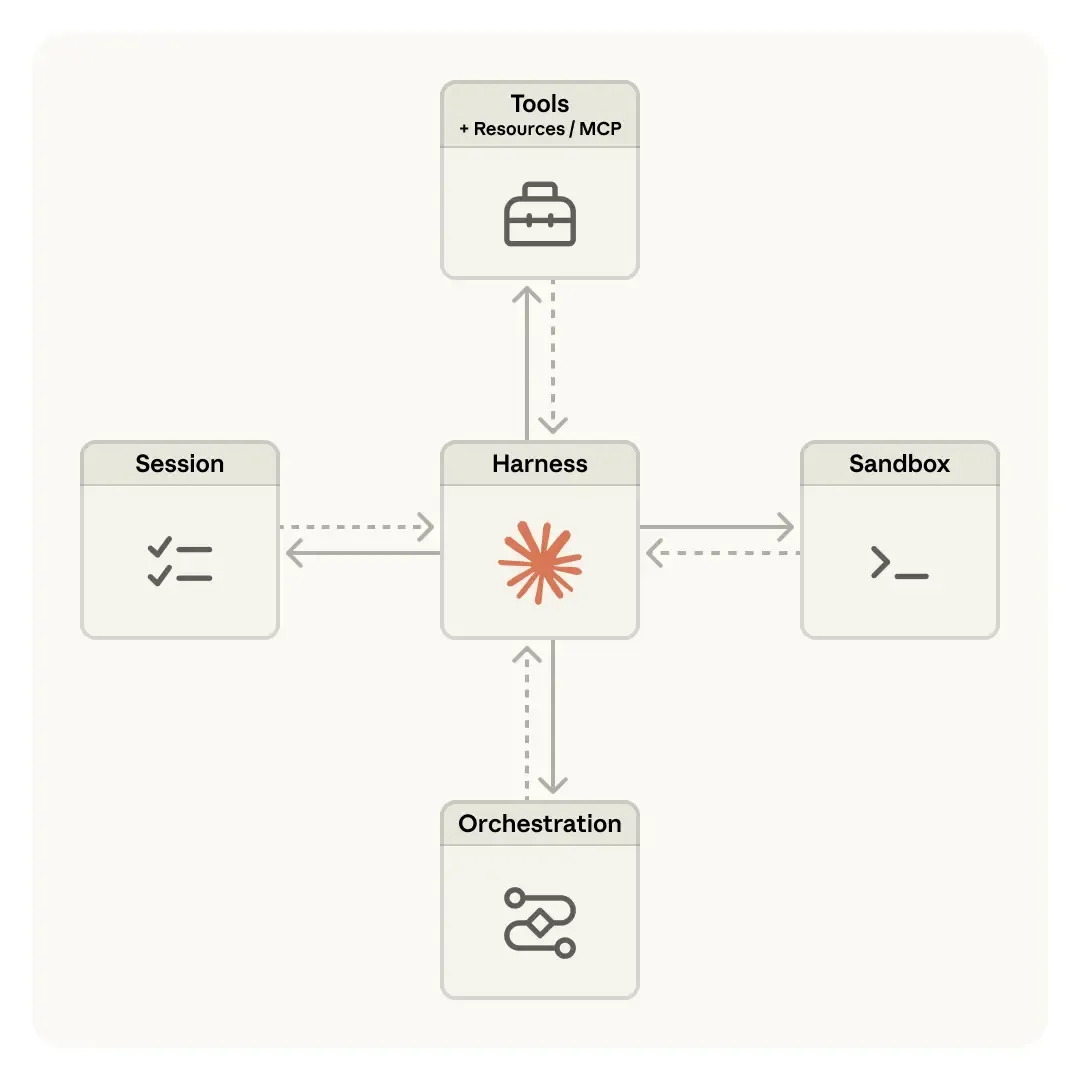
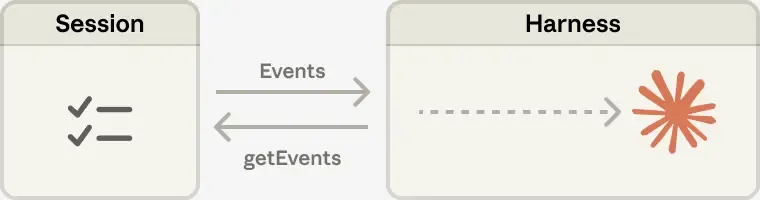
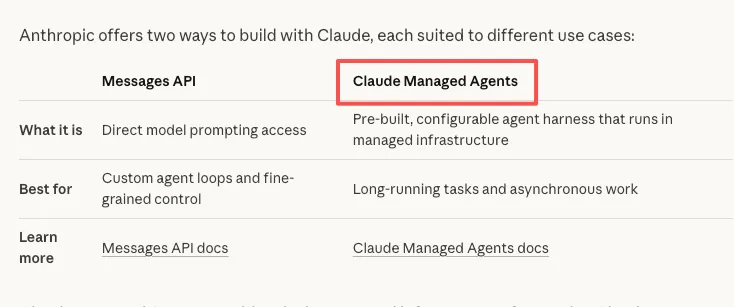
Anthropic describes Managed Agents as a hosted architecture that separates the model’s reasoning from durable sessions and execution. Its engineering explanation covers recoverable session context and long-running execution. This is infrastructure for building and operating agents, not simply a more autonomous Claude chat.
That distinction separates it from chat, Claude Code, Cowork, or a channel-based assistant. If you first need the category definition, see what managed agents are. A managed runtime becomes relevant when a task must survive interruptions, use scoped tools, preserve an execution record, or run as part of a product or internal service.
Where a solo company could benefit
A hosted runtime can be useful for bounded, repeatable work such as processing an intake queue, compiling evidence into a standard report, or running a monitored back-office workflow. It may reduce the burden of creating sandboxes, session recovery, credential storage, and traces yourself.
It is not automatically the best answer for personal research, occasional drafting, or a workflow that fits inside one supervised session. Anthropic’s earlier guidance on building effective agents recommends simple, composable patterns and distinguishes fixed workflows from agents that choose their own path. That is a useful antidote to overbuilding.
The decision is mostly operational
Ask five questions before building:
- Does the task have a clear trigger, completion condition, and owner?
- Which tools require read, write, or send access?
- Where must human approval interrupt the run?
- What happens after a timeout, duplicate event, or partial write?
- Which records must be retained, deleted, or exported?
If these answers are vague, hosting the agent will not make the workflow reliable. It will only make an ambiguous process run elsewhere.
Managed runtime versus a workspace workflow
Use a workspace workflow when a person remains present, inputs vary, and judgment is the main bottleneck. Consider Managed Agents when the workflow needs a service boundary, durable sessions, controlled tools, and operational visibility. A browser AI agent sits elsewhere again: it acts through web interfaces and inherits the risks of logged-in sessions.
The boundary also affects cost. Evaluate model usage, runtime, retries, storage, monitoring, and the time spent investigating failures. Do not decide from a single per-token or per-session number; current prices and beta terms should be checked in Anthropic’s live documentation.
Original visual references
These images are restored from the article's original publication to preserve interface, workflow, and comparison context. Any product UI, pricing, benchmark result, or model availability shown is a historical capture; verify current official information before making a decision.
A safe pilot for a one-person company
Start with one reversible workflow and synthetic or low-sensitivity data. Limit tools to the minimum needed. Require approval before messages, purchases, deletions, or production changes. Log source inputs, tool calls, outputs, and reviewer decisions. Test missing data, malicious instructions inside documents, duplicate triggers, and recovery after interruption.
Only expand after the pilot shows repeatable completion and understandable failures. For a solo business, the scarce resource is not server administration alone; it is attention during exceptions. A managed agent is valuable when it reduces that burden without hiding the evidence needed to supervise it.
https://floatboat.ai/blog/claude-managed-agents-one-person-company